

Blog
17th of Tammuz שִׁבְעָה עָשָׂר בְּתַמּוּז
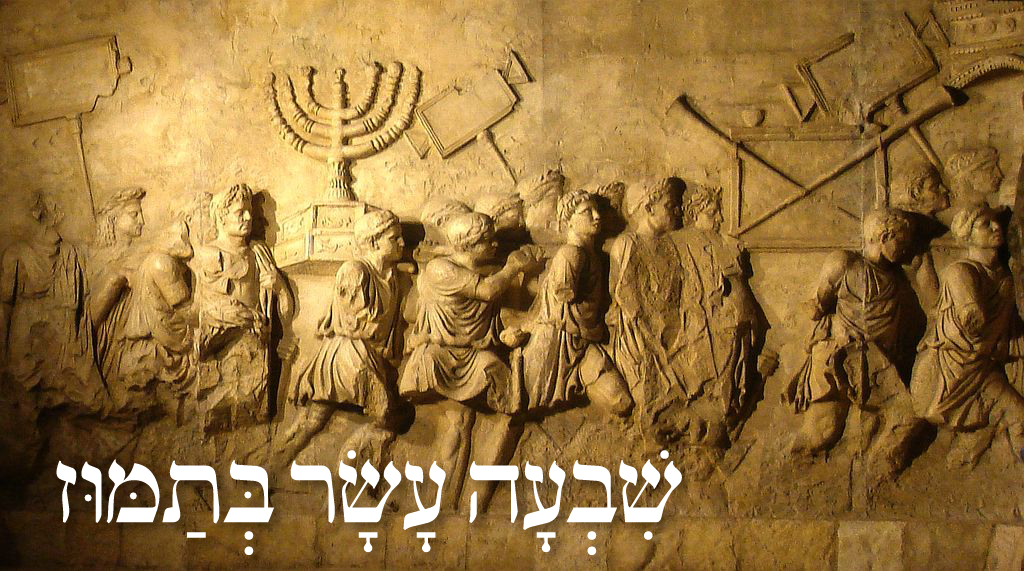
Yesterday we marked the 17th of Tammuz, שִׁבְעָה עָשָׂר בְּתַמּוּז, a day that begins יְמֵי בֵּין הַמְּצָרִים the three-week mourning period leading up to Tisha B’Av. Yud Zain B’Tammuz is a Jewish fast day commemorating the breach of the walls of The Holy City of Jerusalem before the destruction of the Second Temple.
When The Romans set fire to the Temple, the resistance continued. Eventually, after a month, the city of Jerusalem was burned to the ground. The destruction of the Holy City of Jerusalem and the Second Temple marked a major turning point in Jewish history and influenced Judaism immensely. The loss of the Holy City that was the center of religious and national life and the destruction of the Holy Temple necessitated the reshaping of Jewish culture to ensure its continuity and survival. Although synagogues existed a long time before the destruction of the Second Temple in 70 CE, communal worship while the Temple was in Jerusalem focused mostly on sacrificial offerings brought by the Kohanim priests. Johanan ben Zakai, one of the leaders at the end of the Second Temple era, promulgated the idea of creating individual houses of worship in local Jewish communities, villages, and cities. As is evident today, this transformation contributes to the unity, continuity, and resilience of Jewish people by offering a place and a way to pray, worship, honor, and praise God despite the destruction of the Temple and The Holy City. Thus, synagogues became a symbol of hope for return, rebuilding, and renewal of Jewish life and Jewish spirituality.