In the realm of geometry, few entities command as much reverence and admiration as the Platonic Solids.
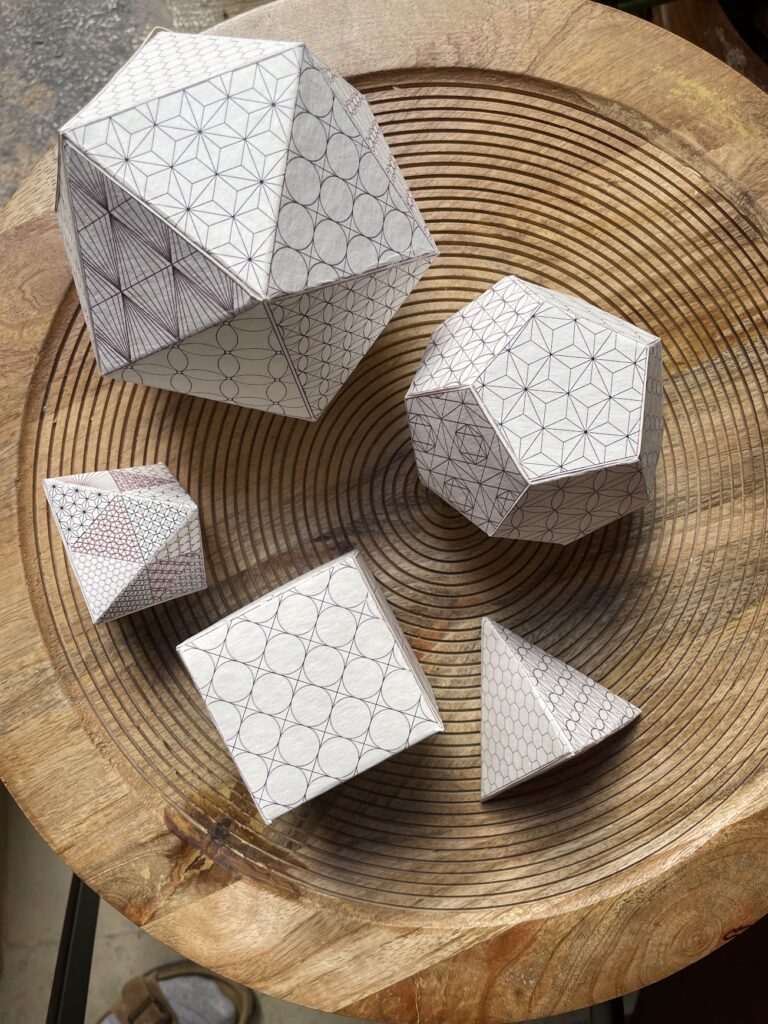
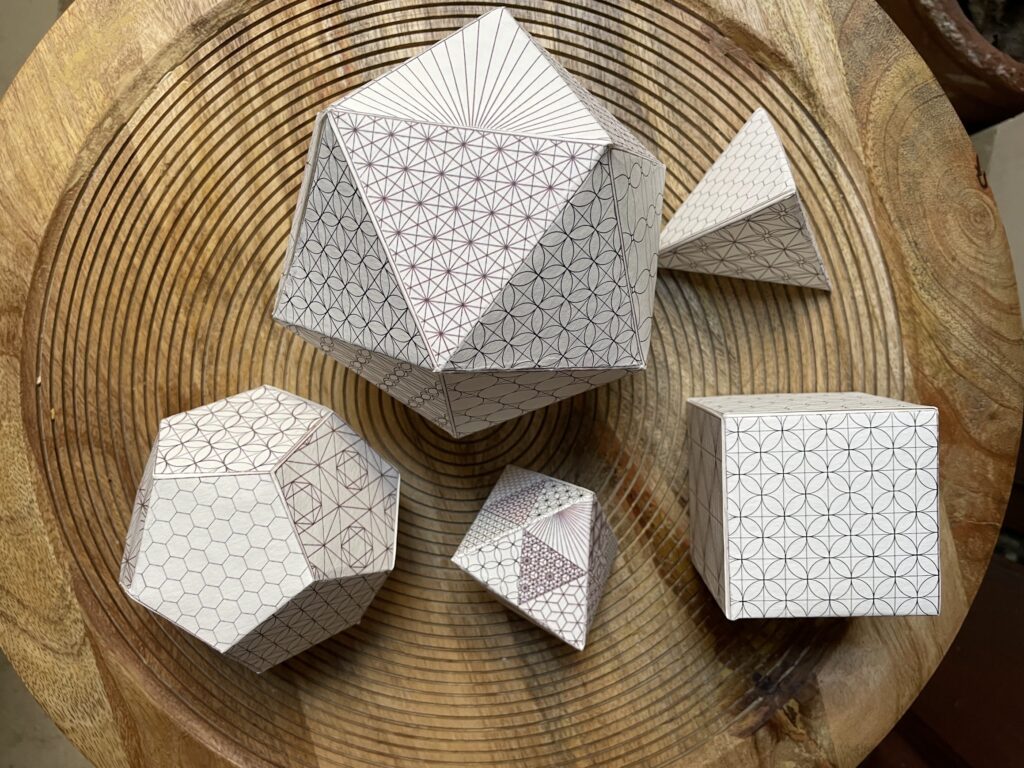
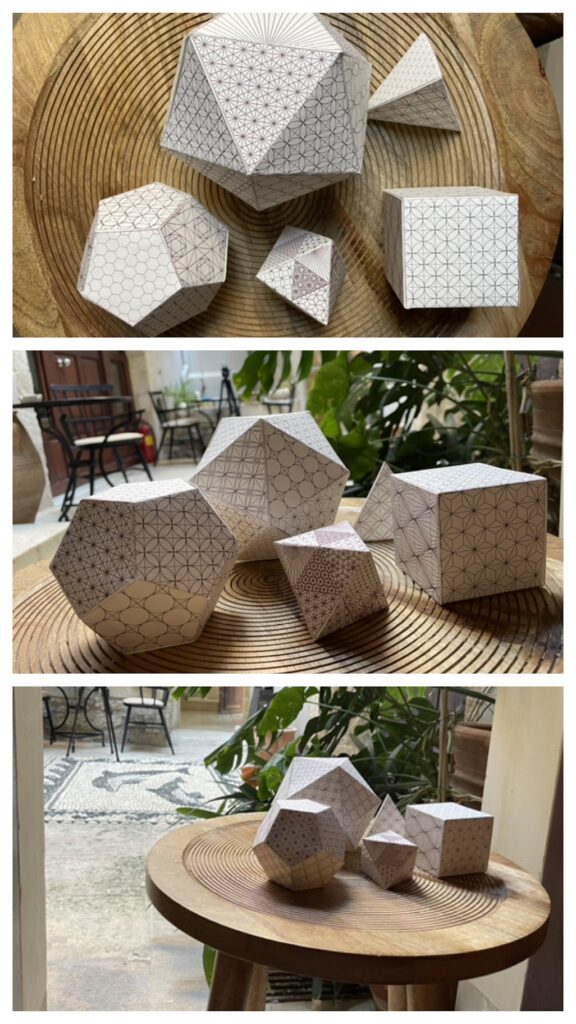
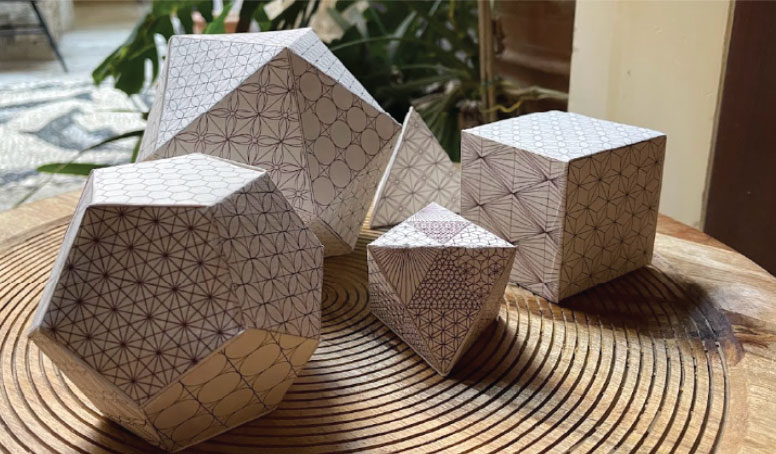
In the realm of geometry, few entities command as much reverence and admiration as the Platonic Solids which are five regular convex polyhedra: Tetrahedron, Hexahedron, Octahedron, Dodecahedron and Icosahedron. Their genesis origin from the profound musings of the ancient Greek philosopher Plato in his seminal work “Timaeus,” Plato envisioned these five solids as the elemental building blocks of the universe, imbued with divine significance. According to Plato, each solid represented one of thefundamental elements: earth, air, water, fire, and aether, the quintessence of celestial substance.
At the core of the Platonic Solids encapsulated a symphony of mathematical geometric perfection that dazzles the mind and ignites our imagination by inherent properties, distinct symmetry, synergetic harmony, and captivating elegance. Each solid is characterized by a unique combination of faces, edges, and vertices meticulously arranged to achieve geometric perfection. From the four triangular faces of the tetrahedron to the twelve pentagonal faces of the dodecahedron, these solids exude a sense of geometric structures that transcend the constraints of the physical entity, reflecting an ability to encapsulate complex concepts within simple forms.